Matcha

How to Brew Matcha

Steep time
30s – 1m
Water temperature
70°C – 80°C

About Matcha

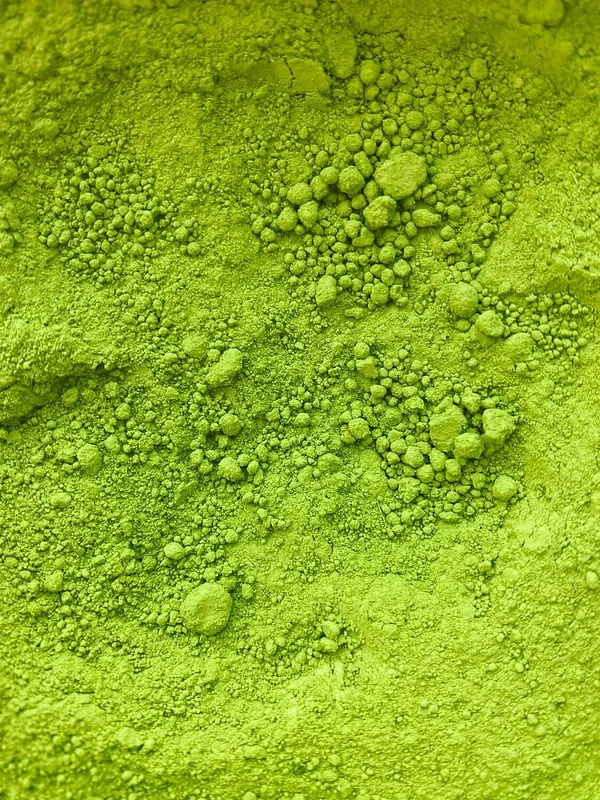
Matcha is green tea ground into a fine powder. The tea plants are shaded for several weeks before harvest, which raises their chlorophyll and the amino acid L-theanine. The leaves are steamed, dried, stripped of stems and veins (the result is called tencha), and then stone-ground. Because you whisk the powder into water and drink the whole leaf, matcha is richer and more concentrated than steeped green tea. Uji in Kyoto and Nishio in Aichi are two of Japan's best-known matcha regions.

What it tastes like

Good matcha is a vivid green, with a creamy, savory umami flavor, a gentle sweetness, and only a light bitterness. Lower grades are duller in color and more astringent, which makes them better suited to lattes and baking.

Step by step

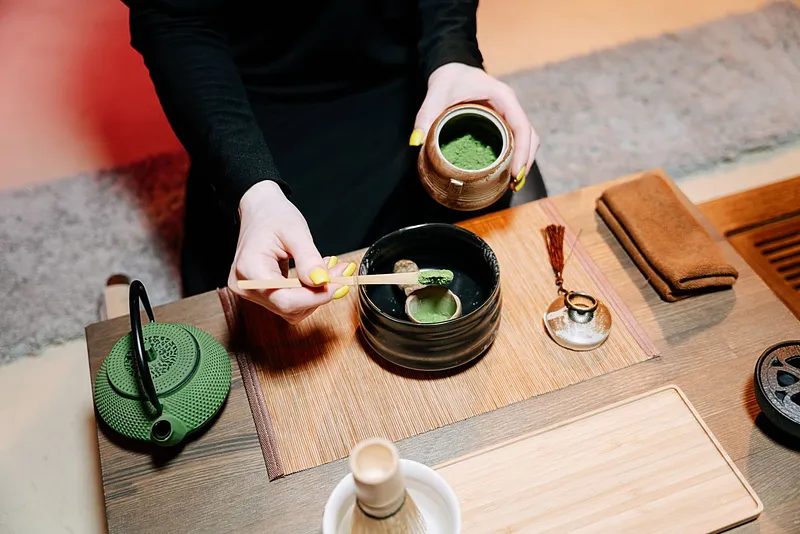
  1. Measure your tea Use about one teaspoon of Matcha leaves per 8 oz cup.
  2. Heat the water Bring fresh water to 70°C – 80°C. Water that is too hot will scorch the leaves.
  3. Steep Pour the water over the leaves and steep for 30s – 1m. Start at the shorter time and taste as you go.
  4. Strain and serve Remove the leaves as soon as the steep is done so the tea does not turn bitter.

Brewing tips

  • Ceremonial grade is meant to be drunk plain. Save culinary grade, which is cheaper and more robust, for lattes, smoothies, and baking.
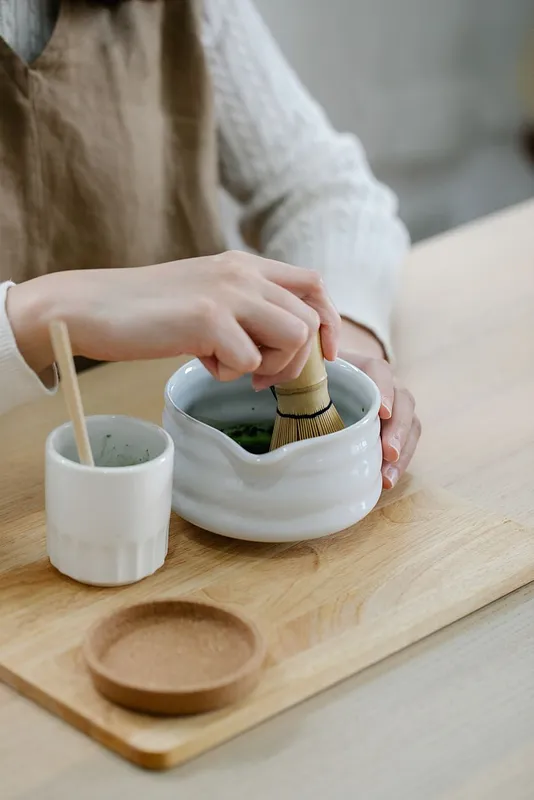
  • Soak a bamboo whisk in warm water for a minute before using it so the tines soften and don't snap.
  • In the Japanese tea ceremony, a small sweet comes before the bowl. Something sweet first balances matcha's bitterness.

Timer

Matcha steeps for 30s – 1m — start the clock as you pour.

Matcha

Timing every cup? The app has this timer for every tea. Get the app →

Enjoy your tea. Next time, the app remembers the time and temperature for you. Get the app →

Other ways to brew Matcha

Usucha (thin tea)

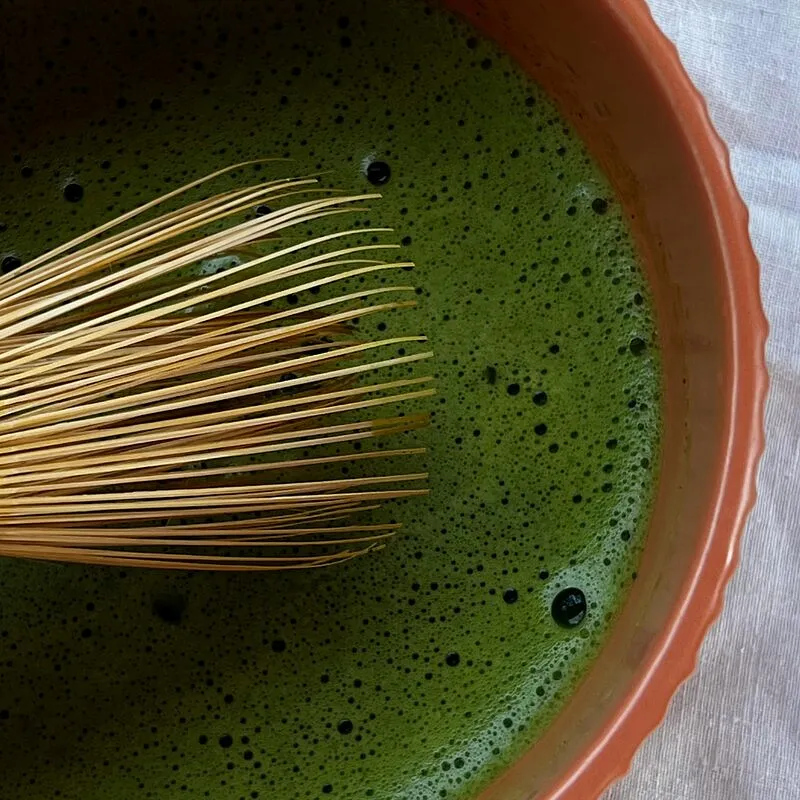
This is everyday matcha. Sift 1–2 g (about one teaspoon) into a wide bowl. Add 2–3 oz (60–80 ml) of water at 158–176°F (70–80°C) and whisk briskly in a zigzag W or M motion, not a circle, for 15–30 seconds, until a fine foam covers the surface. Drink it straight away, before it settles.

Koicha (thick tea)

Made with high-grade matcha for the tea ceremony. Use about 4 g with just 1 oz (30–40 ml) of water and knead it slowly with the whisk into a glossy paste the thickness of melted chocolate, with no foam. Only use your best ceremonial matcha for this; cheaper grades taste harsh at this strength.

Without a whisk

Put a teaspoon of sifted matcha and a little warm water in a jar, close it, and shake hard for 20 seconds. A handheld milk frother works too. Neither gives quite the same fine foam as a bamboo whisk, but both beat stirring with a spoon.

Iced matcha

Whisk or shake one to two teaspoons with 2 oz (60 ml) of warm water until smooth, then pour over ice and top with cold water. Always mix the powder with a little water first; it clumps when it hits cold liquid.

Can you re-steep Matcha?

No. Matcha isn't steeped. You whisk the powdered leaf into the water and drink all of it, so there's nothing left to brew again. If you want a second bowl, make a fresh one.

If your Matcha doesn't taste right

  • Clumpy or gritty? Sift the powder before you add water; matcha clumps from static and humidity. Then whisk briskly from the wrist in a W shape rather than stirring.
  • Bitter? The water was too hot, there was too much powder, or it's a lower grade. Keep the water at 158–176°F (70–80°C). Culinary grade is meant to be bitter; it's made for lattes and baking.
  • No foam? Whisk faster, with the tines near the bottom of the bowl, then lift to the surface for the last few seconds to break up large bubbles. Fresh matcha foams more easily than old.
  • Dull color or hay-like taste? The matcha has oxidized. It fades within weeks of opening. Keep it sealed, away from light and heat, and use an opened tin within four to six weeks.

Ways to drink Matcha

Matcha latte

Whisk one to two teaspoons with 2 oz (60 ml) of warm water until smooth, then top with 6 oz (180 ml) of steamed milk. Oat milk is a popular choice. Sweeten with a little honey or syrup if you like.

Iced matcha latte

Fill a glass with ice and cold milk, then pour the whisked matcha over the top. Make the matcha a little stronger than usual so it isn't lost in the milk.

In baking

Culinary grade matcha is made for cooking. It colors and flavors shortbread, cakes, ice cream, and pancakes. Sift it into the dry ingredients.

Frequently asked questions

What temperature water should you use for matcha?

158–176°F (70–80°C). Boiling water makes matcha taste bitter and burnt. Without a thermometer, boil the water and let it rest for about five minutes.

How much matcha should I use?

About 1–2 g, or one teaspoon, for a bowl of usucha (thin tea) with 2–3 oz (60–80 ml) of water. Thick koicha uses about 4 g with less water.

Do you need a bamboo whisk for matcha?

It makes the smoothest, frothiest matcha, but it isn't essential. A handheld milk frother or shaking it in a jar with a lid both work. Soak a bamboo whisk in warm water before using it so the tines don't snap.

What's the difference between ceremonial and culinary matcha?

Ceremonial grade is made from younger leaves and is meant to be drunk plain: vivid green, sweet, and savory. Culinary grade is cheaper and more bitter, which suits lattes and baking where milk and sugar balance it.

How much caffeine is in matcha?

More than steeped green tea, because you drink the whole leaf. A teaspoon (about 2 g) usually has roughly 40–70 mg, and stronger servings more.

How should I store matcha?

Airtight, away from light and heat. An opened tin keeps its color and flavor for about four to six weeks. Unopened tins keep longer in the fridge or freezer; let them come to room temperature before opening so moisture doesn't condense on the powder.

Why is my matcha clumpy?

Matcha clumps from static and humidity. Sift it through a fine strainer before adding water, and whisk briskly in a W shape rather than stirring.

Want to taste this one?

Our shop opens soon. Leave your email and we'll let you know the moment Matcha is available.

Related Reading

More brewing guides you might enjoy

Back to all brewing guides

Time every steep perfectly with our app

Download on the App Store