
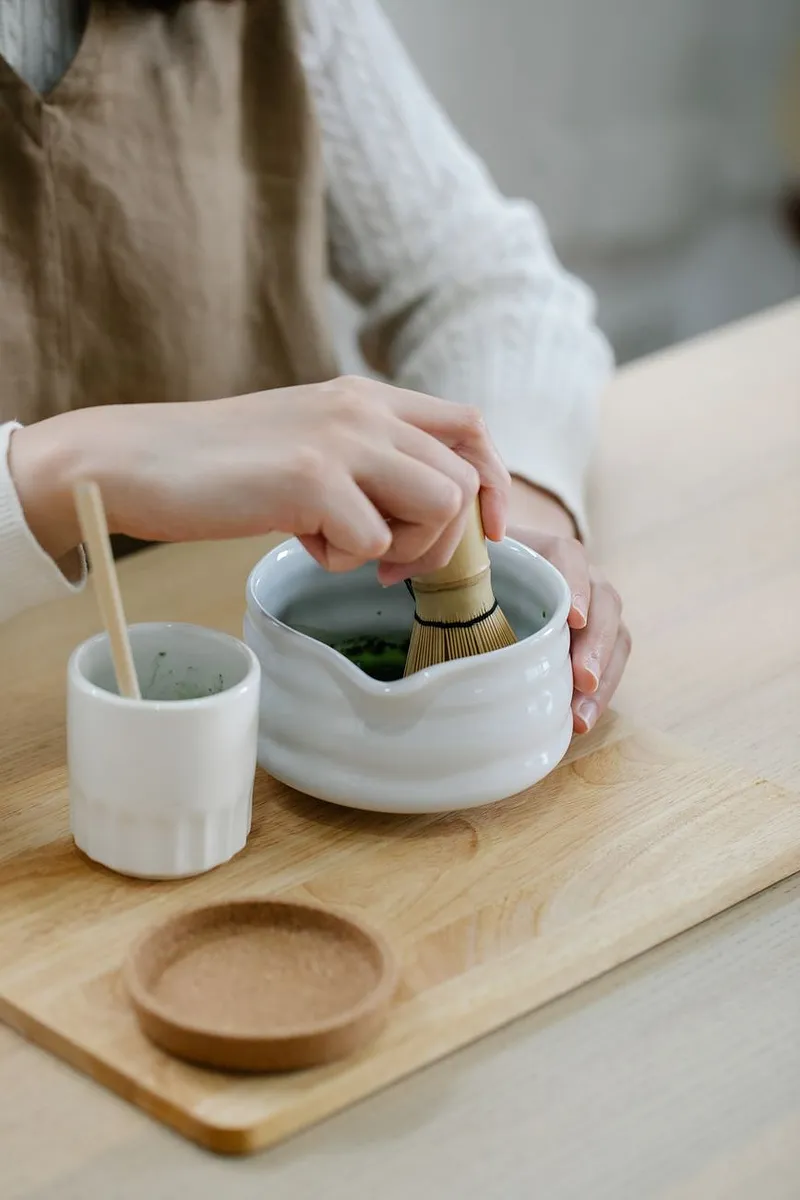
For loose-leaf Japanese tea, the one piece worth owning is a kyusu: a small side-handled teapot with a fine built-in strainer. For matcha, you need a bamboo whisk (chasen) and a wide bowl (chawan); a scoop and a sifter are nice extras. Everything else is optional.
Japanese teaware can be beautiful, specialized, and expensive, and it's easy to buy more than you need. Most of these tools solve a real problem, though, and knowing which problem tells you whether you need them.
For sencha and other loose-leaf teas
Kyusu (side-handled teapot)
Worth it, if you drink Japanese tea regularly.
The kyusu is built around how Japanese tea is brewed: small amounts, short steeps, every drop poured out. Three features matter:
- The side handle lets you pour with one hand in a smooth tilting motion, all the way to the last drop.
- The fine strainer — a mesh basket or a ceramic filter built into the spout — catches the small, broken leaves of steamed sencha, which clog most Western infusers.
- The small size, usually 8–12 oz, makes two or three small cups at a time.
The most famous kyusu come from Tokoname in Aichi, known for unglazed red clay, and Banko in Mie, known for purple-brown clay. Unglazed clay is said to soften the tea over time; glazed porcelain is neutral and easier to keep clean.
What to look for: a strainer fine enough for deep-steamed sencha, a lid that fits snugly, and a pot that pours without dribbling. A good basic kyusu costs $30–60. Hand-thrown ones from named potters go far higher, and you're paying for the craft rather than the tea.
Yuzamashi (water cooler)
Nice, not necessary.
A small pitcher used to cool boiled water before it goes into the pot. Pouring from kettle to yuzamashi drops the temperature by about 15–20°F, and it doubles as a measure for how much water you need. Your teacups can do the same job.
Yunomi (teacups)
Any small cup will do.
Tall, handleless cups for everyday tea. Small cups matter more than authentic ones, since Japanese tea is poured in rounds and drunk while it's fresh.
Shiboridashi and houhin
For gyokuro enthusiasts.
Small, shallow, handleless vessels with a lid and spout. They're designed for brewing a few ounces of gyokuro at low temperatures, letting you see the leaves unfurl. If you don't drink gyokuro, skip them.
For matcha
Chasen (bamboo whisk)
Essential.
A whisk carved from a single piece of bamboo, split into 80 to 120 fine tines. Nothing else produces the same fine foam — a metal whisk is too stiff, and an electric frother makes big, unstable bubbles. Takayama, in Nara, is the traditional center of chasen making.
Chasen wear out; expect to replace one every few months with daily use. Soak it in warm water before whisking to soften the tines, rinse it after, and dry it on a stand (kusenaoshi) so it keeps its shape.
Chawan (tea bowl)
Worth it, or use any wide bowl.
The chawan needs to be wide enough for the whisk to move in a quick W or M shape — roughly 4.5–5 inches across. A cereal bowl works for learning. A real chawan is the piece most people end up caring about, and it's where Japanese ceramic tradition shows most: rough raku bowls, glazed Shino, Hagi bowls that change color with use.
Chashaku (bamboo scoop)
Nice, but a teaspoon works.
Two heaped scoops make roughly one serving of thin tea. A teaspoon does the same job.
Sifter
Underrated.
Matcha clumps, especially in humid weather. Sifting it through a fine mesh strainer before whisking is the single easiest fix for lumpy matcha, and costs a few dollars.
Natsume (tea caddy)
Decorative; an airtight tin works better for storage.
The lacquered caddy used in the ceremony to hold matcha for the session. For keeping matcha fresh, an airtight tin in the fridge is better.
The short list
| If you drink... | Buy first | Add later |
|---|---|---|
| Sencha, hojicha, genmaicha | kyusu | yunomi, yuzamashi |
| Gyokuro | small kyusu or shiboridashi | yuzamashi |
| Matcha | chasen, sifter, wide bowl | chawan, chashaku, whisk stand |
Where spending stops paying off
The tea matters more than the teaware. A $30 kyusu and good sencha will beat a hand-thrown pot and mediocre leaf every time. Spend on the tools that solve a problem — a fine strainer, a real bamboo whisk — and treat the rest as things to collect slowly because you enjoy them.
For how to use the kyusu, see our guide to brewing sencha.