
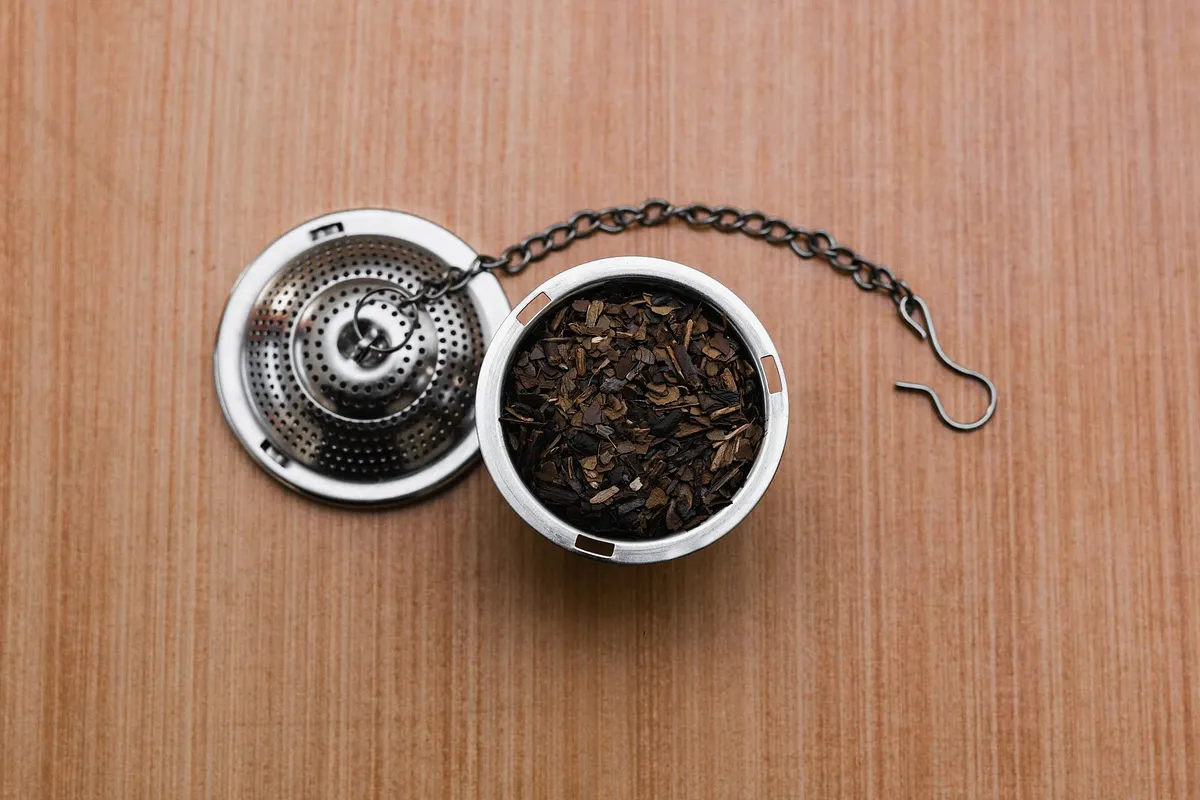
Yes — most loose leaf tea is good for a second cup, and often a third. Just add about a minute to each steep, and use the leaves again the same day.
This is one of the real advantages of loose leaf over tea bags, and it's why loose leaf usually costs less per cup than it looks on the shelf.
Why the second cup works
A tea leaf holds more flavor than one steep can pull out. The first cup takes the compounds that dissolve fastest; plenty remains behind for a second pass.
The second cup won't taste identical, and that's not a flaw. It's usually smoother and less sharp, because the astringent compounds — the ones responsible for that dry, puckery feeling — largely came out in round one. Many people prefer the second cup.
Which teas reuse well
- Oolong — the best by far. Tightly rolled oolong will give you four, five, even six cups. It's the tea that most rewards doing this.
- Pu-erh — excellent. Dark, earthy tea that keeps going for many rounds and is very hard to ruin.
- Green tea — yes, two or three cups. Keep the water cool and the steeps short.
- White tea — yes, two or three. It releases flavor slowly, so there's plenty left.
- Black tea — usually one good second cup. Whole leaves do better than the small broken bits.
- Herbal tea — generally not. Chamomile, mint, and hibiscus give everything on the first steep.
The general pattern: big whole leaves reuse well, small broken pieces don't. Anything chopped fine releases all its flavor at once, which is exactly why tea bags are a one-shot proposition.
How to do it
- Add time. If the first steep was 3 minutes, make the second about 4, and the third about 5. The leaves release flavor more slowly as they go.
- Same water temperature as the first cup.
- Don't squeeze the infuser. Pressing the wet leaves forces out the bitter compounds you just avoided.
- Keep going until it's thin. When a cup tastes like faintly flavored water, the leaves are spent. It's obvious when it happens.
The one safety rule
Use them the same day. Wet leaves left at room temperature overnight are damp organic material sitting in a warm room, and that's a reasonable place for bacteria and mold to grow.
A few hours on the counter is fine. If you want to stretch it to the next morning, put the wet leaves in the fridge in a covered container and use them at breakfast. Beyond that, compost them.
What this saves you
A bag of loose leaf oolong that seems expensive at $15 looks different when each spoonful makes four cups instead of one.
Compare honestly: a tea bag makes one mug and goes in the bin. A teaspoon of decent loose leaf makes two to four. That difference is usually enough to close the price gap entirely, and often to reverse it.
So if you've been throwing your leaves out after one steep, you've been getting maybe a third of what you paid for. Brew the same leaves again this afternoon — you'll be surprised how good the second cup is.