
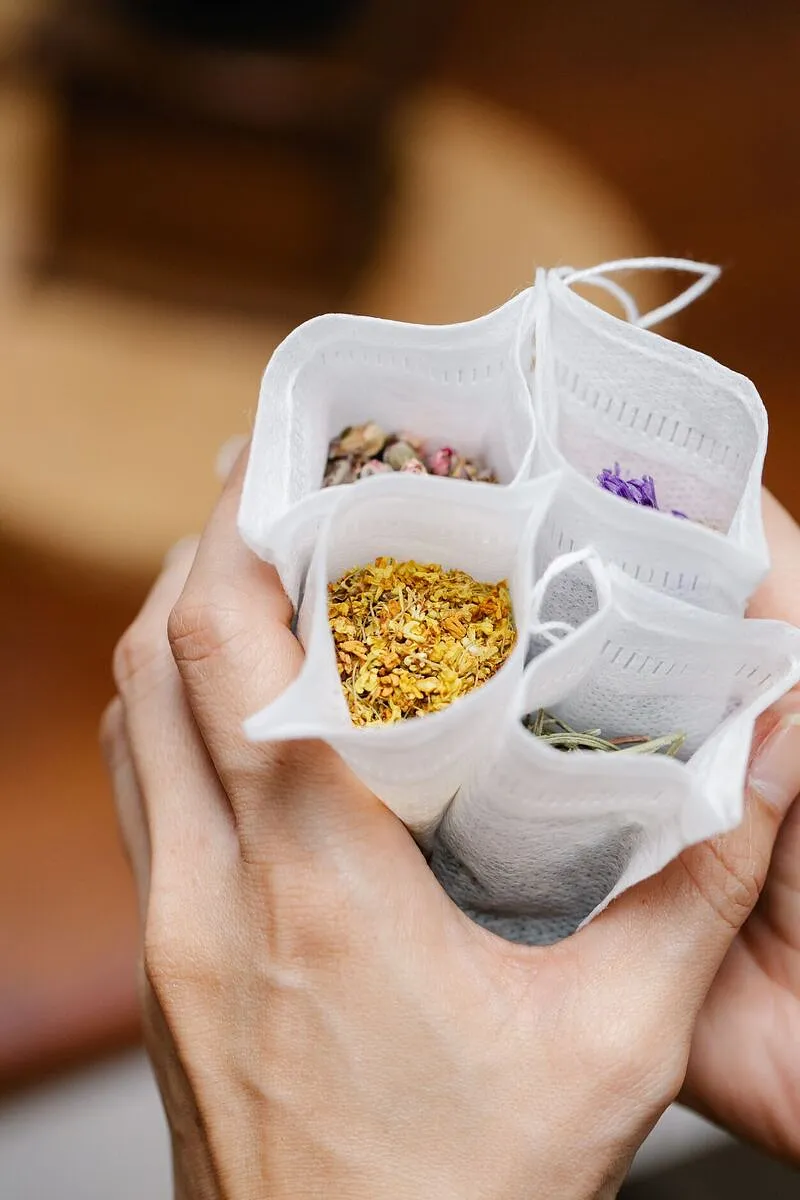
Yes, it matters. Loose leaf usually tastes better because it's whole leaf, while standard flat tea bags are filled with fannings and dust — small fragments that lose their aroma quickly, brew harsh, and have no room to unfurl. Bags win on convenience, and roomy pyramid sachets filled with whole leaf close most of the gap.
The tea bag was an accident. The usual story is that around 1908 a New York merchant named Thomas Sullivan sent out samples in little silk pouches, and his customers, rather than emptying them, dropped them straight into the pot. Whether or not it happened quite like that, the idea caught on, and within a few decades the bag had become, for most Americans, simply what tea was. Many people have drunk bagged tea happily all their lives. But the gap between a bag and a cup of good loose leaf is real, and it has less to do with snobbery than with what's inside the paper.
It's a different grade of leaf
"Loose leaf" and "tea bag" are not two packages for the same tea. They usually hold different grades of leaf.
Loose leaf is whole or large broken leaves. A conventional flat tea bag is typically filled with what the trade calls fannings and dust: the small fragments and powder left after the larger leaves have been sorted out for loose sale. There's nothing wrong with them, but they sit at the bottom of the grading ladder, and that's where most of the difference in flavor begins.
Why whole leaves make a better cup
Aroma lives in the intact leaf. Tea's fragrant oils are held inside the leaf. Shatter it into dust and you expose far more surface to the air, so much of the aroma has escaped long before the tea reaches your kettle.
Small pieces brew fast and harsh. All that surface area releases everything almost at once, bitter tannins included. That's why bagged tea turns sharp if you leave it a moment too long, and why it tends toward a single brisk note rather than layers of flavor.
Leaves need room. Whole leaves expand a great deal as they steep, and they need space for water to move through them. Pressed into a small paper sachet, they can't open, and the water can't circulate. You end up under-extracting the pleasant flavors while over-extracting the harsh ones.
Freshness and seeing what you buy
Whole leaves also keep better than dust, and loose tea is often sold closer to harvest. Just as useful, you can see it: the color, the size, whether the leaves are whole or crumbled. A sealed paper bag asks you to take its contents on trust.
Where bags still earn their place
None of this makes tea bags worthless. Drop one in a mug and you're done, with no infuser to rinse and no leaves to scoop. For a quick cup at the office or on the road, that's a real advantage.
The line between the two has also blurred. Many tea companies now sell whole-leaf tea in roomy pyramid sachets, large enough for the leaves to unfurl. They give you much of the loose-leaf experience with the convenience of a bag. If you like bags but want a better cup, look for sachets with visible whole leaves inside rather than flat paper ones filled with dust.
The verdict
For a more aromatic, more complex, more forgiving cup, loose leaf wins, and the reasons are concrete. If speed matters most, a good whole-leaf sachet gets you most of the way there. But if you've only ever known flat paper bags and wondered what the fuss is about, try a good loose-leaf tea, brewed in something that gives it room. Most people taste the difference on the first cup.