
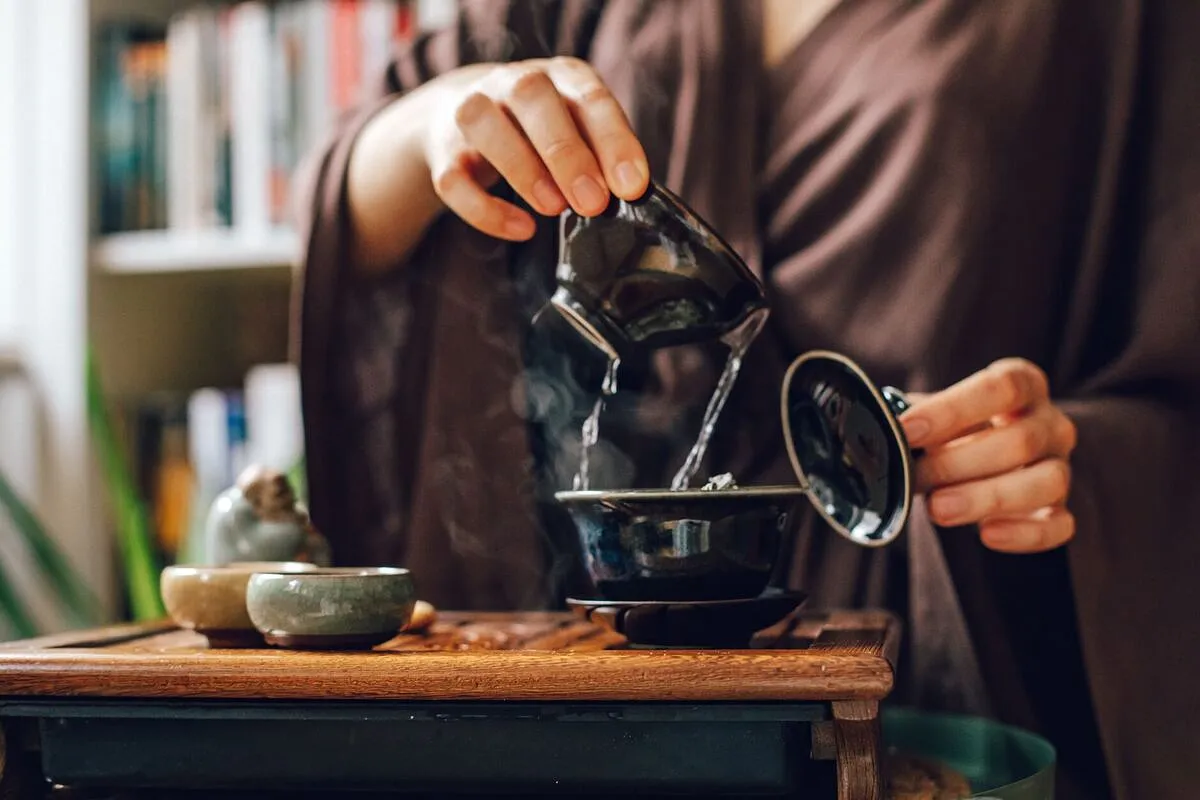
Water temperature decides which compounds leave the leaf. Very hot water pulls out bitter tannins and catechins along with the sweetness, so delicate green, white, and yellow teas want 160–185°F, while black, pu-erh, and herbal teas need 200–212°F. Boiling water on green tea is the most common reason people think they dislike it.
Chinese tea drinkers once judged their water by eye. They named the stages of a heating kettle after what the bubbles looked like: "shrimp eyes" for the first tiny bubbles on the bottom, then "crab eyes," then "fish eyes," then a "string of pearls" rising together, and finally the full rolling boil. Delicate green teas were meant for water around the fish-eye stage, well short of the boil. It was a thermometer made of observation, and it captured something many Western kitchens still overlook: not every tea wants boiling water.
What heat actually does
Brewing is extraction. Hot water dissolves compounds inside the leaf and carries them into your cup, but not everything dissolves at the same rate, and temperature sets the pace. The pleasant compounds, sweet and savory amino acids and gentle aromatics, come out readily even in moderately hot water. The harsh ones, the tannins and catechins behind bitterness and that dry, puckering feeling, need more heat to come out in force.
Cooler water, then, favors sweetness and leaves much of the bitterness behind. Hotter water takes everything. The right temperature is simply the hottest a particular leaf can take before it turns on you.
Delicate leaves scorch
Green, white, and yellow teas are barely oxidized, and their leaves are tender. Pour boiling water over them and you effectively cook them: the sweetness collapses and a grassy, bitter astringency takes its place. This is the most common brewing mistake there is, and it's why so many people believe they don't like green tea. What they dislike is scalded green tea, which is a different thing.
The fix costs nothing but a little patience. Let the kettle sit a few minutes after it boils, or turn it off before it gets there. Water in the 160–185°F range lets these teas taste the way they should: clean, sweet, and faintly vegetal.
Robust leaves need the heat
At the other end, fully oxidized and fermented teas want exactly what the delicate ones fear. Black tea, dark tea, and most herbals are tougher material and need water at or near a full boil to open up. Brew a black tea too cool and you'll get a thin, flat cup with all its body still locked in the leaf. Here, holding back is the mistake.
Temperatures at a glance
- Green tea: 160–180°F, well off the boil
- White tea: 160–185°F
- Yellow tea: 160–180°F, like green
- Oolong tea: 185–205°F; lighter oolongs cooler, darker ones hotter
- Black tea: 200–212°F, at or near a full boil
- Dark tea (pu-erh): 205–212°F
- Herbal and rooibos: 208–212°F, a full rolling boil
Hitting the right temperature without a thermometer
A variable-temperature kettle makes this effortless, but you can manage without one:
- Watch the bubbles. Small bubbles clinging to the bottom of the pot mean you're somewhere around 160–170°F, right for green tea. Streams of larger bubbles rising steadily put you near 180–190°F. A full, roaring boil is 212°F at sea level.
- Let it rest. If your kettle only boils, take it off and wait. Two or three minutes with the lid open is usually enough to bring it down into green-tea range; a closed kettle holds its heat longer.
- Pour it twice. Water poured from the kettle into an empty, room-temperature pitcher or mug loses heat on contact. Pour it over the leaves from there.
- Add a splash of cool. A little room-temperature water stirred into freshly boiled water is the fastest fix of all.
Why it's worth the trouble
Getting the temperature right is the easiest improvement you can make to your tea, and it's free. Leaves that tasted bitter and disappointing can turn sweet and layered, not because you bought better tea, but because you finally gave the leaf water it could work with. Pair the right temperature with the right steep time, and you have the foundation of a very good cup.