
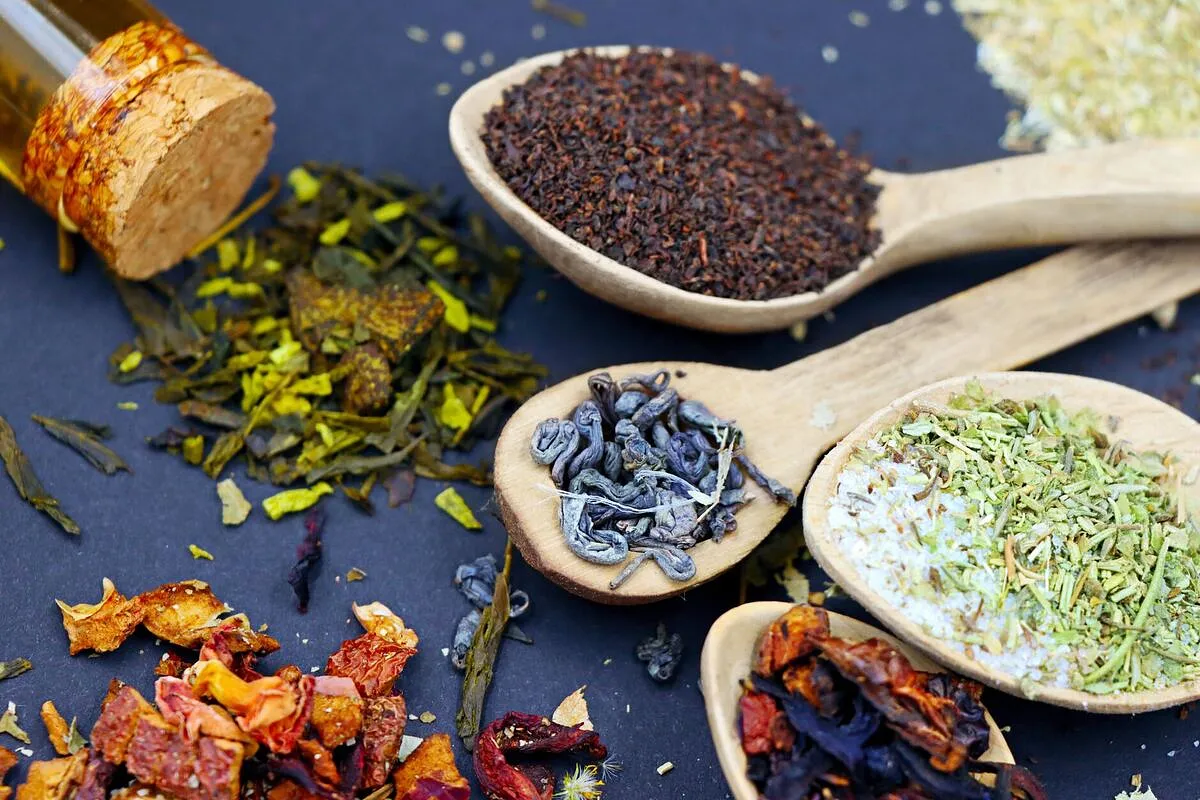
The six types of tea are green, white, yellow, oolong, black, and dark (pu-erh). All six come from one plant, Camellia sinensis, and differ only in how the leaves are processed — above all, how much they oxidize: barely (green, white, yellow), partially (oolong), or fully (black). Dark tea is also aged and fermented.
A good tea shop can be bewildering: hundreds of names, a dozen countries, leaves curled, twisted, rolled into pellets, or pressed into cakes. It helps to know that the Chinese, who have been at this longest, sort the whole lot into just six families by color, and that the color is a fairly reliable clue to what's in the cup.
The thing that changes the color is oxidation, the same browning you see when a cut apple sits out. A tea maker can halt it immediately with heat, let it run partway, or let it go all the way, and that one decision, along with a few others about rolling, drying, and aging, accounts for most of the difference between a pale green cup and a dark red one.
Green tea
Green tea is heated soon after picking, which stops oxidation before it starts. Japan does this mostly with steam, China mostly in a hot pan or drum, and the two methods taste different: steamed Japanese greens like sencha tend toward grassy and marine, pan-fired Chinese greens like Longjing toward toasty and nutty. Either way the cup is bright, fresh, and vegetal. Green tea is the everyday drink of much of East Asia and a good place to begin.
White tea
White tea is the least handled of all. The youngest leaves and unopened buds, often covered in fine silver down, are withered and dried with almost nothing in between. The result is the quietest cup in the family: soft, faintly sweet, with notes of honey, melon, or hay. It takes a surprising volume of these fluffy leaves to brew a single cup, so measure generously.
Oolong tea
Oolong occupies the broad middle ground, oxidized anywhere from lightly to nearly fully, and that range makes it the most varied family of the six. A light Taiwanese oolong can be floral and creamy, almost green; a dark, roasted Wuyi rock oolong tastes of toasted grain, caramel, and stone fruit. The leaves are repeatedly bruised and rested to control the oxidation, and the best oolongs can be steeped again and again, each infusion a little different.
Black tea
Black tea is fully oxidized, which darkens the leaf and deepens the flavor into something malty and robust. This is the tea most of the West grew up on: the backbone of English Breakfast, the base of chai, the cup that welcomes milk and sugar. The regional styles are wide apart, from the brisk, malty strength of Assam to the light, muscatel character of a fine Darjeeling. (In China, confusingly, black tea is called hong cha, "red tea," after the color of the liquor rather than the leaf.)
Dark tea (pu-erh)
Dark tea, of which pu-erh is the best known, takes a different road. The leaves are first processed much like green tea, then fermented by microbes, either slowly over years of aging or quickly under controlled heat and humidity. The result tastes like nothing else: earthy, smooth, and deep, sometimes described as woodsy or reminiscent of a forest floor. Good pu-erh can improve with age, and serious drinkers cellar it the way others cellar wine.
Yellow tea
Yellow tea is the rarest of the six, and few people outside China have tasted it. It's made like green tea with one extra step: the warm, damp leaves are wrapped or piled and left to rest, which mellows them. That "sealing yellow" step rounds off green tea's grassy edge and leaves a smooth, gently sweet cup. Only a handful of Chinese regions make it, in small amounts. If you ever see it, buy some.
Finding your way in
Knowing the six families turns a wall of unfamiliar names into a map. In the mood for something bright and fresh? Start with green or white. Something deep and warming? Black or dark. Curious? Oolong will keep you busy for years. There's no best type, only the one that suits the hour and your mood, and the pleasure is in tasting your way across all six. Each type's guide gives the water temperature and steep time to start with.