
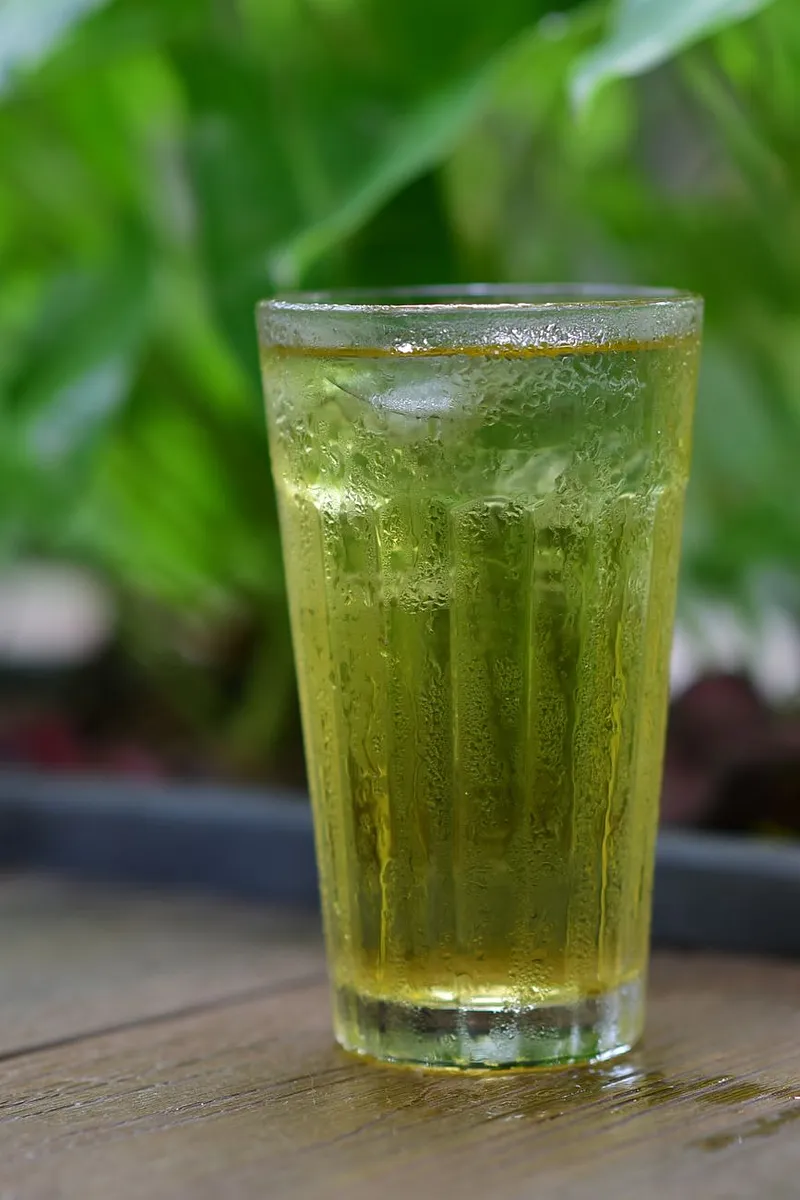
Cloudy tea is almost always harmless. If it clouded as it cooled, that's tea cream — caffeine and polyphenols clumping together once the water loses its heat. If there's a dull film on top, that's hard water. Neither affects safety. The one cloudiness worth worrying about is fuzz, sliminess, or a sour smell, which means the tea has spoiled.
Start by noticing when the cloudiness appeared. That usually tells you which one you have.
It went cloudy as it cooled: tea cream
The most common cause, and the one that makes iced tea look murky.
Hot water holds a great deal of tea in solution. As it cools, some of those compounds stop staying apart. In black tea, caffeine binds with theaflavins — the reddish pigments formed when the leaf is oxidized — and that pairing acts as the core of particles that grow until they scatter light.1 The result is a milky, sometimes muddy haze, and in a strong pot left long enough, a fine sediment at the bottom.
Green tea does the same thing with a different partner: caffeine and EGCG, its main catechin, pair up and pull proteins and other compounds in with them. The colder the tea, the faster it happens — a green tea infusion held at refrigerator temperature clouds sharply within the first few hours.2
Two things make it worse:
- Strength. Tea cream forms in strong infusions.1 A double-strength brew meant for pouring over ice is close to the worst case.
- Minerals. Calcium and magnesium encourage the polyphenols to clump, so hard water creams more readily.2
Tea cream is a sign of a well-extracted tea, not a defect in the leaf. It does change the texture and dull the flavor slightly, and it's why so much bottled iced tea is made from extracts processed specifically to stay clear.
There's a film on top: hard water
A slick, faintly iridescent skin on the surface of a cup — sometimes breaking into flakes when you stir — is a different thing entirely.
That film is tea polyphenols that have reacted with the minerals in your water, holding small islands of calcium carbonate in an organic layer. The harder the water, the stronger the film; brewed with distilled water, no film formed at all.3
It's not harmful, but it's a sign the water is binding up flavor that should have reached you. If you're seeing it routinely, your water is worth a look.
The fix for iced tea: brew it cold
If you want clear iced tea, the most reliable answer is not to heat it in the first place.
Cold water extracts tea differently. Black tea steeped in the refrigerator overnight came out with less caffeine and markedly less color than the same leaf brewed hot4 — less of exactly the material that forms cream, and it was never hot, so there's no cooling step to trigger it. A cold brew tends to stay clear in the fridge for days.
If you prefer hot-brewed iced tea:
- Brew it weaker and use more ice, rather than making a concentrate.
- Use soft or filtered water if yours is hard.
- Add lemon. Citric acid ties up the calcium in the water, which noticeably weakens the surface film.3
- Accept a little haze. It's cosmetic. The tea tastes fine.
When cloudiness means something's actually wrong
Tea cream is even and fine. Spoilage isn't. Discard the tea if you see:
- Fuzzy spots, strands, or a floating mat — on the brewed tea or on the dry leaf.
- Ropy or slimy texture when you pour.
- A sour, musty, or fermented smell that wasn't there when it was fresh.
- Brewed tea that sat out at room temperature for a day or more. It may look fine; it isn't worth it.
Dry leaf is the subtler risk. Tea is grown and processed in warm, humid conditions that suit molds as well as tea plants, and contamination can happen at any stage through to storage. Some of those molds produce toxins, and a meaningful fraction of them passes from the leaf into the cup when you brew.5 Leaf that has been damp, smells musty, or shows any visible growth should be thrown out, not brewed and judged. Keeping it dry and airtight is most of how tea lasts.
A quick diagnostic
- Cloudy only once it cooled → tea cream. Harmless.
- Film or flakes on the surface → hard water. Harmless, but costing you flavor.
- Cloudy iced tea, every time → brew weaker, filter your water, or cold brew.
- Fuzz, slime, or a sour smell → spoiled. Pour it out.
Fixing the cup in front of you
For tea cream, warm it back up gently — the cloudiness came with the cold, and a hot cup is usually clear. For iced tea, a splash of water or more ice thins it enough to help. For the surface film, a squeeze of lemon. For anything that smells wrong, nothing; start over with fresh leaf.
Most of the time, though, cloudy tea is just tea that was brewed strong and then got cold. That's a fine thing for tea to be.