
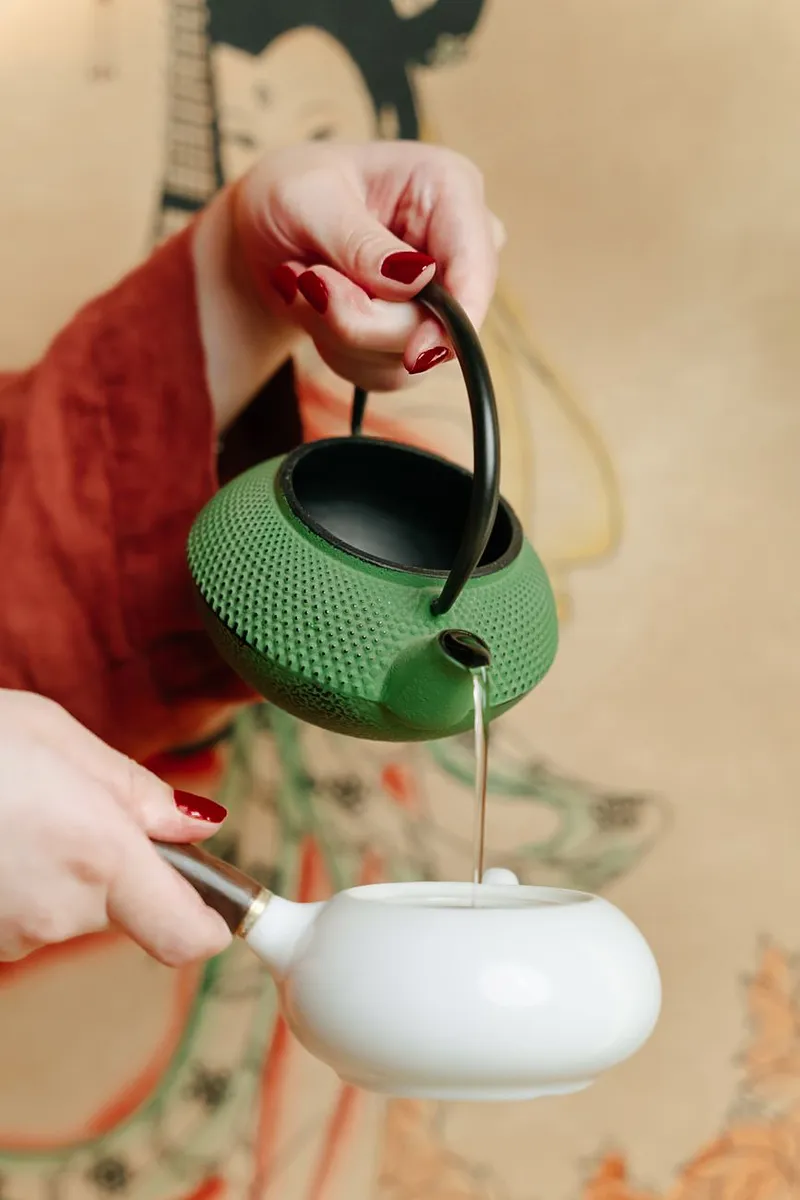
To brew sencha, use about 1 teaspoon (2–3 grams) of leaf per 3–4 oz of water at 160–175°F, steep for 60 seconds, and pour out every last drop. Then brew the same leaves again, shorter and slightly hotter. Water that's too hot is the main reason sencha tastes bitter.
Sencha is the everyday tea of Japan, and in Japan it's usually brewed in small amounts, in a side-handled teapot, and shared out a few sips at a time. You don't need to copy all of that. But the reasons behind it make for a much better cup, even in a mug.
Why sencha needs cooler water
Sencha is steamed and finely rolled, so it gives up its flavor quickly — and its bitterness just as quickly. Boiling water scalds the leaf and pulls out a harsh, vegetal edge that no change in timing can repair.
In one study of green tea brewed at three temperatures and for eight lengths of time, the best-tasting cup came at 185°F (85°C) for about 3 minutes, and at near-boiling, green tea's main antioxidant began breaking down within a few minutes.1 Sencha's fine, steamed leaf brews faster than the tea in that study, which is why Japanese brewing goes cooler and shorter still.
No thermometer? Japanese households have an elegant answer: pour boiling water into each empty cup first, then from the cups into the teapot. Every transfer drops the temperature by roughly 15–20°F, and it warms the cups at the same time. Two pours gets you close to sencha's range.
What you need
- A small teapot with a strainer. The traditional choice is a kyusu, a side-handled pot with a fine filter built in. Any small teapot with a mesh basket works.
- Small cups. Sencha is meant to be sipped, and small cups mean every pour is fresh.
- A kettle. Any kettle will do, using the cooling trick above.
Step by step
- Measure the leaf. About 4–5 grams, or two level teaspoons, for two small cups (roughly 6–7 oz of water in total).
- Cool the water. Boil, then pour into the cups. Wait a moment.
- Add the water to the leaf. Pour from the cups into the pot.
- Steep for about 60 seconds. Deep-steamed (fukamushi) sencha needs only 30–45; the fine leaf brews very fast. Don't stir or swirl the pot, which just makes the cup bitter.
- Pour in rounds. If you're serving two cups, pour a little into each, then back to the first, and so on, so both cups get the same strength. The tea at the top of the pot is weaker than the tea at the bottom.
- Pour out every last drop. Tilt the pot all the way. Those final drops are the most concentrated and flavorful in the pot, and leaving water behind means it keeps steeping the leaves, which ruins the next round.
The second and third steeps
Sencha is meant to be brewed more than once, and each round tastes different.
- First steep: sweet, savory, grassy. This is where the delicate flavors are.
- Second steep: pour almost immediately — 10–20 seconds — with slightly hotter water. The leaves are already open, so it brews fast. More body, more astringency, often the boldest cup.
- Third steep: hotter again, about 60 seconds. Lighter and more refreshing.
Leave the lid off the pot between steeps so the damp leaves don't stew in their own heat.
Brewing sencha in a mug
You can. Use 1 teaspoon per 8 oz of water at 160–175°F, steep 1–2 minutes, and take the leaves out completely when the time is up. You'll lose a bit of the concentrated sweetness of the small-pot method, but you'll get a very good cup.
If it tastes off
- Bitter, harsh: the water was too hot. Let it cool longer, or do one more cup-to-pot transfer.
- Bitter, drying: steeped too long, or water left in the pot between rounds. Pour out every drop.
- Flat, muted: often hard water. Hard, alkaline tap water breaks down green tea's catechins and dulls its aroma.2 Try filtered water.
- Tastes like hay: the leaf is stale. Sencha fades within months of opening — buy small amounts.
The short version
Cooler water, short steeps, small cups, and every last drop out of the pot. Sencha rewards attention more than equipment.
Our green tea steep timer defaults to the right range for sencha, so you can concentrate on the pour.