
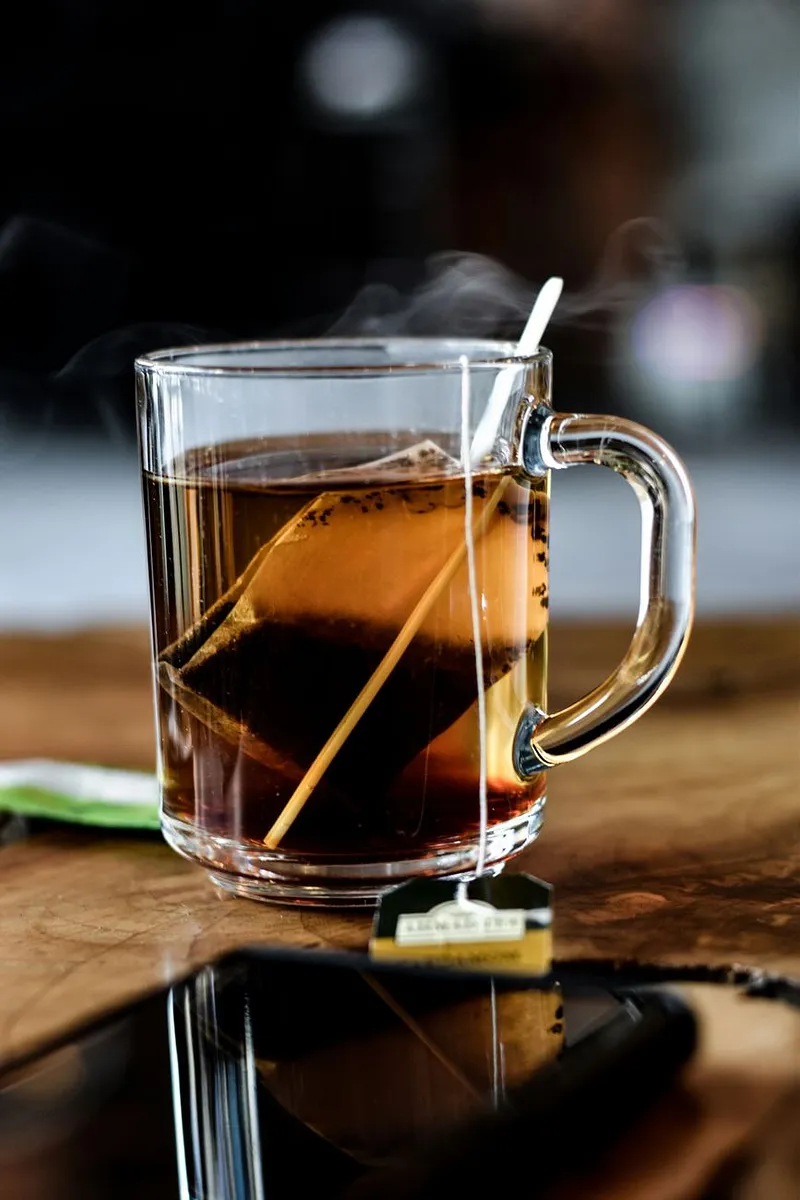
Leaving the tea bag in won't hurt you, but it will make your tea bitter. Tea keeps extracting for as long as the bag sits in the water, and the parts that come out late are the harsh ones.
So it's not bad for your health. It's just bad for the tea.
What happens if you leave it in
Hot water pulls things out of tea leaves in a rough order.
The good stuff comes out first — the aroma, the sweetness, the flavor you actually wanted. Those arrive in the first couple of minutes. What keeps coming after that is mostly tannins, natural compounds that taste bitter and leave your mouth feeling dry and rough. Measured across a steep, polyphenol extraction keeps climbing long after the flavor you wanted has already arrived.1
Tannins cause that puckering sensation by binding to proteins in your saliva and stripping away its slipperiness.2 That's why an over-brewed cup doesn't just taste bitter — it feels different in your mouth, almost chalky.
Leave the bag in the whole time you're drinking and every sip is stronger and harsher than the one before it. The last mouthful is usually the worst, which is a good sign this is what's happening.
How long should the bag actually stay in?
- Black tea: 3–5 minutes
- Green tea: 2–3 minutes
- White tea: 2–5 minutes
- Oolong: 3–5 minutes
- Herbal (chamomile, mint, hibiscus): 5–7 minutes or longer
Then take it out.
Herbal teas are the exception to all of this. They aren't made from tea leaves at all, so they don't carry the catechin-derived tannins that cause the problem. You genuinely can't over-brew chamomile — if it tastes weak, leave it longer.
The exception has an exception, though. "Herbal" covers a lot of ground, and a few tisanes do get worse with time in the water. Hibiscus turns aggressively sour past about ten minutes because it's extracting organic acids, not tannins. Some barks and roots — cinnamon, licorice, certain chai blends with real spice in them — turn medicinal rather than bitter. And rooibos, the usual poster child for the unruinable cup, does contain modest tannins; it just has so few that you'd have to work at it. The rule holds for the flowers and leaves. Treat the woody stuff with slightly more care.
Why tea bags go bitter faster than loose leaf
The tea inside most bags is ground very fine — small broken pieces rather than whole leaves. More surface area means everything comes out faster, including the bitter compounds.
That's why a bag can go from good to unpleasant in about ninety seconds, while whole loose leaves are more forgiving. The timing is tighter with bags, not looser.
Should you squeeze the bag?
No. Squeezing forces out concentrated liquid from the very center of the bag — the most over-extracted, most tannin-heavy part of it.
That squeeze is where a lot of bitterness comes from, and it's a hard habit to break because it feels like you're getting your money's worth. You're getting the part you didn't want.
Lift the bag, let it drip for a second, and put it on a saucer.
If your tea is already bitter
You can improve the cup you have:
- Add hot water to dilute it.
- Add milk if it's black tea. The proteins in milk bind to the tannins so they can't bind to your saliva, which is a large part of why milk in strong tea works so well.
- Pour it over ice. Cold mutes bitterness considerably.
What you can't do is undo the over-brewing. The compounds are in the water now.
Why milk works, specifically
It's worth understanding the milk trick, because it explains the whole problem in reverse.
Astringency isn't a taste. It's a physical sensation — tea polyphenols latch onto the proline-rich proteins that keep your saliva slick, and once those are tied up your mouth stops feeling lubricated. The dryness is the reaction.
Milk carries proteins of its own, casein in particular, that bind those same polyphenols first.3 Tie the tannins up in the cup and there's less left over to tie up your saliva, so the astringency drops away while the malty, caramelized flavors underneath survive. That's why milk rescues a strong Assam and does nothing useful for an over-steeped green tea: green tea's problem is bitterness in the actual taste, not polyphenols grabbing at your mouth.
It's also why the trade isn't free. Those bound polyphenols are less available to you as well as to your saliva. Not a reason to drink your tea bitter — just a reason to brew it properly and use milk because you like it, rather than as a repair.
The habit that fixes it permanently
Take the bag out at the time, not when you remember.
That sounds obvious and it's genuinely the hardest part, because three minutes is exactly long enough to go do something else and forget. Set a timer when you pour — it's the whole reason we built one into the app — and take the bag out when it goes off.
After a couple of weeks you'll know what three minutes feels like and won't need it.