
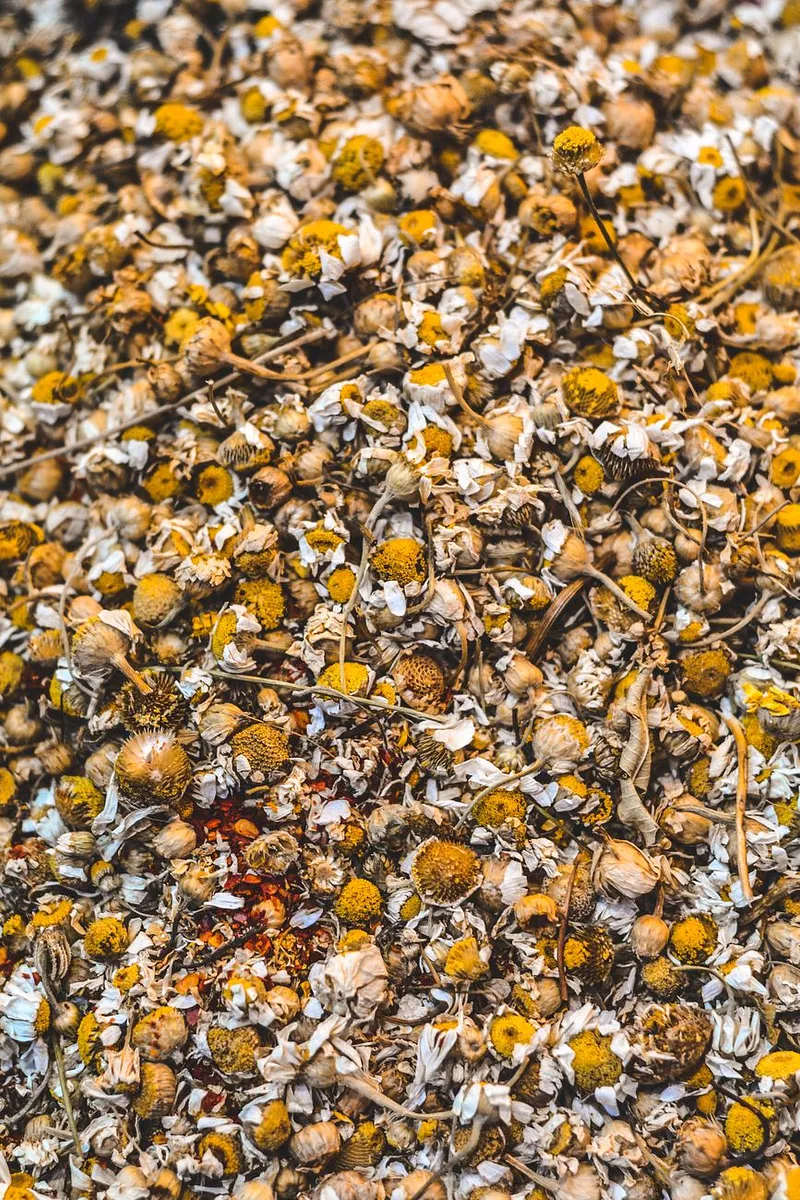
Herbal teas aren't tea. Tea comes from one plant, Camellia sinensis; chamomile, peppermint, rooibos, hibiscus, and ginger come from entirely different ones. The proper word is tisane — an infusion of something other than tea leaves.
The distinction isn't pedantry. It explains why tisanes are caffeine-free, why they're almost impossible to over-steep, and why they want treatment that would ruin a green tea.
Why tisanes behave differently
No tea leaf means no tea tannins, and tannins are what make an over-steeped cup bitter and drying.
So the usual anxieties don't apply. You can't scorch a chamomile flower with boiling water, and leaving it in for fifteen minutes makes it stronger rather than harsh. If a tisane tastes weak — and they very often do — the answer is almost always more time, more material, or both.
They're also working with tougher stuff. Flowers, roots, bark, and dried fruit give up their flavor far more slowly than a leaf does, which is why five to seven minutes is a starting point rather than a limit.
A field guide to the common ones
- Chamomile. Dried flowers, apple-like and faintly honeyed. The classic evening cup, long used as a gentle sleep aid — though the clinical evidence for it remains limited and mixed.1 Use more than you think: a proper cup takes a generous tablespoon of whole flowers.
- Peppermint. Bright, cooling, and the most reliably strong-flavored tisane. Traditionally drunk after meals to settle digestion; peppermint oil in particular has been studied for digestive discomfort.2 Whole dried leaves beat the dust in most tea bags by a wide margin.
- Rooibos. From a South African shrub, not related to tea at all. Naturally sweet, reddish, slightly woody, and caffeine-free. Notably low in tannins, so it takes milk well and never turns astringent — a genuine substitute for black tea in the evening.
- Hibiscus. Dried calyces, tart and ruby-colored. Sharp enough that many people sweeten it. Superb iced, and the tartness is real acidity rather than astringency.
- Ginger. Sliced fresh or dried root, pungent and warming. Best made by simmering rather than steeping — actual boiling for ten minutes extracts far more than pouring water over it. Well studied for nausea.3
- Lemon verbena, lemongrass, lemon balm. Three different plants, all citrus-scented, frequently confused. Verbena is the most aromatic and the best of the three on its own.
How to brew a tisane properly
Water: full boil, 212°F, always.
Time: 5–7 minutes minimum; 10 is often better.
Amount: roughly double what you'd use of tea leaves by volume, since dried flowers and leaves are bulky and light.
Cover it. This matters more than for tea — the aromatic oils that give mint and chamomile their character evaporate readily, and a lid keeps them in the cup rather than in the room.
For roots and bark — ginger, licorice, cinnamon — simmer instead of steeping. Ten minutes at a low boil, covered.
On health claims
Tisanes have a long history of medicinal use, and some of that tradition is supported by modern evidence while much of it isn't.
The honest position: chamomile, peppermint, and ginger each have reasonable research behind specific, modest effects, and the NIH maintains readable summaries of what's actually known. Most other claims you'll encounter are stronger than the evidence. A tisane is a pleasant, warm, caffeine-free drink, and that's sufficient reason to make one.
Worth noting that "natural" doesn't mean inert — some herbs interact with medications, and a few are genuinely unsuitable during pregnancy. If you're drinking something medicinally rather than for pleasure, it's worth a word with a doctor.
Where tisanes earn their place
In the evening, mostly. The appeal of a caffeine-free cup at nine at night is that it lets the ritual of making tea survive past the hour when actual tea would cost you sleep.
That's not a small thing. A great deal of what tea does for a day has nothing to do with the leaf — it's the pause, the warmth, the few minutes of waiting. Tisanes deliver all of that, at any hour, without consequence.