
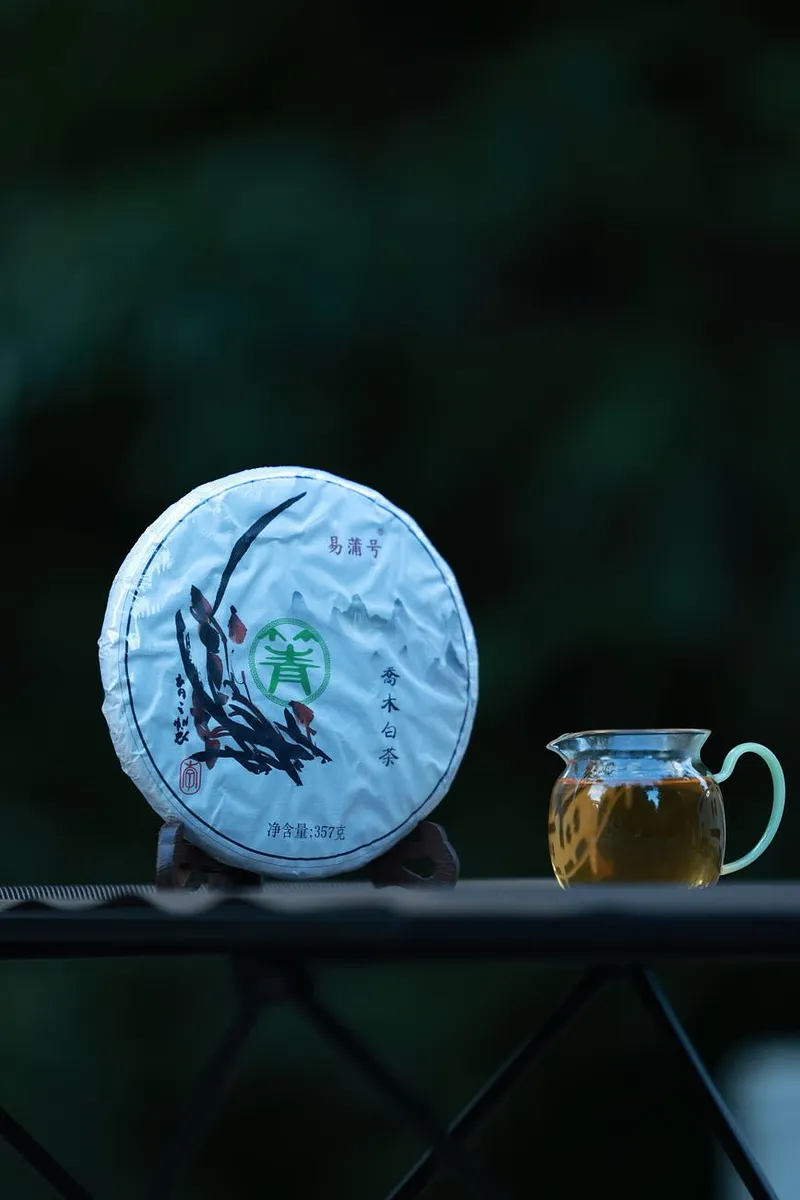
Pu-erh is tea that has been deliberately fermented by microbes, and it comes in two kinds: sheng (raw), which ages slowly over decades, and shou (ripe), which is fermented quickly on purpose. They taste different enough that liking one tells you very little about the other.
It's also the only tea that is commonly older than the person drinking it, and the only one people buy as an investment.
What makes pu-erh different
Every other tea is finished when it leaves the factory, and from that point it's slowly going stale. Pu-erh is the exception: it's alive in a meaningful sense, hosting microbial activity that continues changing the leaf for years.
That's fermentation in the strict sense — microorganisms at work — as distinct from the enzymatic oxidation that makes black tea.1 The two get confused constantly, including on packaging, but they're different processes with different results.
Pu-erh comes from Yunnan province in southwestern China, usually from older, larger-leaf tea trees rather than the cultivated bushes used elsewhere. It's traditionally pressed into cakes, bricks, or nests, which both eased transport and, as it turned out, helped it age.
Raw (sheng) versus ripe (shou)
Raw pu-erh is made the old way: leaves are processed and pressed, then left to age naturally. Young sheng is bright, brisk, sometimes aggressively bitter — closer to a rough green tea than to what most people expect from pu-erh. Over ten or twenty years it mellows into something deep, sweet, and complex. Good aged sheng is expensive for exactly this reason: someone stored it for a generation.
Ripe pu-erh was developed in the 1970s to compress that timeline. The leaves are piled, dampened, and kept warm for weeks under controlled conditions, accelerating fermentation.2 The result is immediately dark, smooth, and earthy — the woodsy, almost soil-like flavor most people mean when they say "pu-erh." It's ready to drink now, costs a fraction of aged sheng, and is far more forgiving.
Start with ripe. Young raw pu-erh is an acquired taste, and buying aged raw without knowing what you're doing is an expensive way to be disappointed.
Why you rinse pu-erh
Pour hot water over the leaves, wait a few seconds, and pour it off before brewing properly.
Two reasons. Practically, these leaves have been compressed for years and need waking up — the rinse begins loosening them so the first real infusion isn't thin. And since pu-erh is stored for long periods, often unwrapped, a quick rinse washes away dust.
One rinse for ripe pu-erh, sometimes two for a tightly compressed cake. Don't let the rinse linger; a few seconds is enough.
How to brew it
Water: 212°F, a full boil. Pu-erh is the one tea that never wants cooler water.
Time: rinse briefly, then 3–4 minutes in a mug.
Re-steeps: many. Ripe pu-erh will go five or six rounds in a mug and far more gongfu style.
It's nearly impossible to over-steep into real bitterness, which makes it the ideal tea for distracted mornings. A forgotten pu-erh gets heavy, not sharp.
Storing it
The rules are the opposite of every other tea, which usually wants airtight darkness.
Pu-erh wants to breathe. Keep it loosely wrapped in its original paper, somewhere stable, dark, and odor-free, with moderate humidity. Not airtight, not in the refrigerator, and above all not near spices or coffee — pu-erh absorbs smells eagerly and permanently.
Left alone in reasonable conditions, it will slowly improve. That's the appeal, and also the trap: a cake bought today and forgotten in a cupboard is worth more in ten years, assuming you can leave it alone.
Is the aging worth it?
For raw pu-erh, genuinely yes — the transformation is real and dramatic, and it's chemically measurable: catechins fall away over time while darker theabrownins accumulate, which is most of why old pu-erh is mellow where young pu-erh is sharp.3 For ripe, much less so; it improves somewhat over a few years and then plateaus.
But you don't need to participate in any of that to enjoy the tea. A well-made ripe pu-erh, drunk this month, is one of the most comforting things you can put in a cup: dark, smooth, faintly sweet, and completely unlike anything else on the shelf.
Our pu-erh steep timer has the water temperature and steep time dialed in if you'd rather not do the math yourself.