
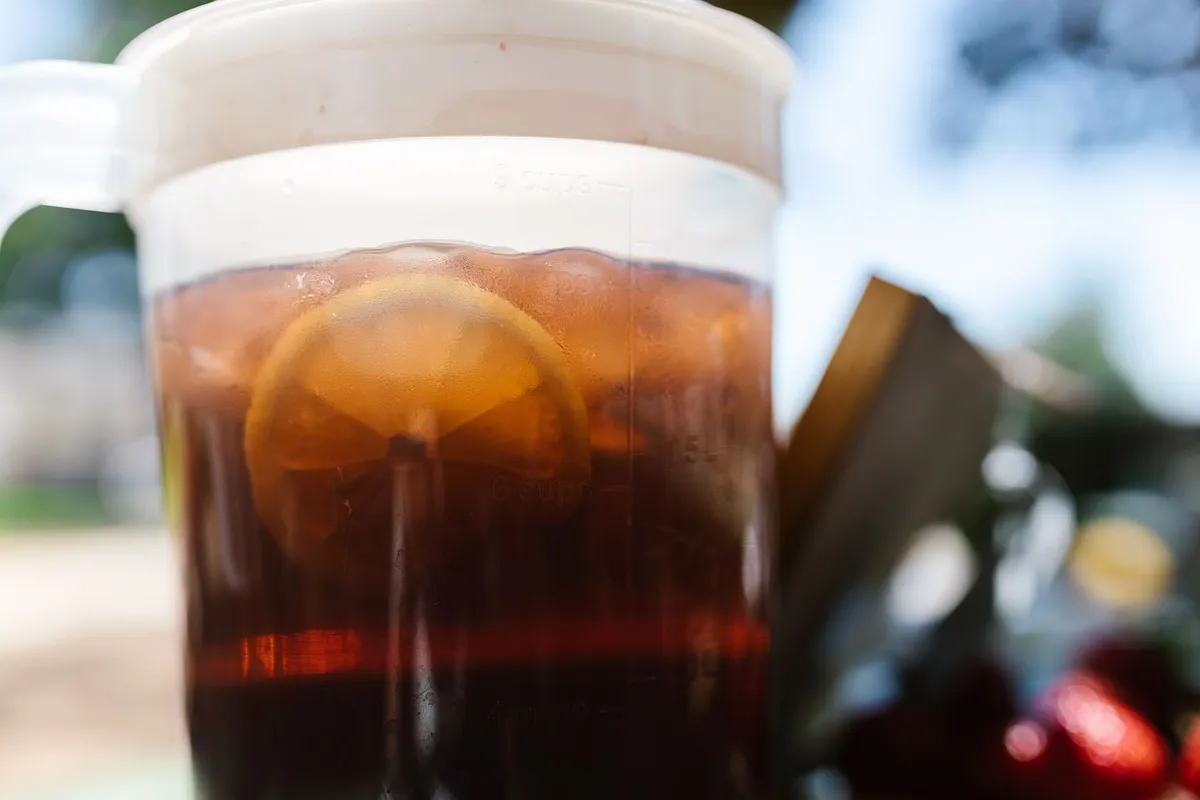
To cold brew tea, put the leaves in cold water and leave them in the refrigerator for six to twelve hours. That's the entire method. No kettle, no timer, and — because the water never gets hot — almost no chance of bitterness.
Cold brewing is not iced tea. Iced tea is brewed hot and chilled; cold brew is extracted cold from the start, and the result is a different drink. The Japanese have a name for it, mizudashi, and in summer a pitcher of cold-brewed green tea in the refrigerator is as ordinary there as a pitcher of iced tea in Georgia.
Why cold brewing can't go bitter
Temperature controls what dissolves. The compounds responsible for astringency and bitterness — tannins, and caffeine to a lesser extent — are far less soluble in cold water than the sweeter, aromatic ones.1
So a cold steep pulls out the pleasant part and largely leaves the harsh part in the leaf.2 This is why you can forget a cold brew overnight and it will still be good, while forgetting a hot steep by four minutes ruins it. The forgiving quality isn't a matter of degree; the mechanism is genuinely different.
A side effect worth knowing: cold brewed tea contains meaningfully less caffeine than the same leaf brewed hot, though "less" is not "none."3
The ratio and the timing
- Leaf: about 1 tablespoon per 4 cups of water — roughly half again what you'd use hot, because cold extraction is less efficient.
- Water: cold, filtered tap water. Don't start with warm, and don't bother with distilled; ordinary drinking water makes a sweeter cold brew.
- Time: 6–8 hours for greens and whites, 8–12 for oolongs and blacks, up to 12 for herbals.
- Where: the refrigerator, not the counter. Room-temperature steeping for this long is a food-safety question, not a flavor one.
- After: strain the leaves out and drink within about three days.
Start it before bed and it's ready at breakfast. That's most of the appeal.
Which teas are worth cold brewing
- Green tea — excellent. Cold brewing is the single most forgiving way to drink a good Japanese green. Sencha and gyokuro turn sweet and almost broth-like, with none of the grassiness that hot water can drag out.
- White tea — excellent. Delicate and honeyed, and white tea's subtlety survives cold brewing better than it survives most things.
- Oolong — very good. Floral, high-mountain styles especially. Roasted oolongs lose some of their character.
- Black tea — good, and different. Smooth and low in astringency, but it gives up the malty depth that makes hot black tea what it is. Fine iced; not a replacement.
- Herbals — mixed. Hibiscus and mint are superb. Chamomile and rooibos are better hot, since they need heat to give up much of anything.
- Pu-erh — skip it. The earthiness needs heat.
The practical version
A jar, a spoonful of leaf, cold water, a lid, the fridge. Strain in the morning.
You don't need a dedicated cold-brew vessel, though a jar with a built-in strainer basket saves a step. Some people tie the leaf in a cloth bag for easy removal; it works, and it also slightly slows extraction, so add an hour.
If it comes out weak, use more leaf rather than more time — past about twelve hours, additional steeping adds very little.
When to reach for it
Summer, obviously. But the more interesting case is tea you've been disappointed by.
A green tea that keeps coming out bitter, a white tea that tastes like nothing — both are often worth one cold attempt before you give up on the bag. Cold brewing removes temperature and timing from the equation entirely, which means what you taste is close to the leaf itself. Sometimes that reveals a tea you were simply brewing badly. Occasionally it confirms the leaf was never very good.
Either way you learn something, and you're out nothing but a night's waiting.