
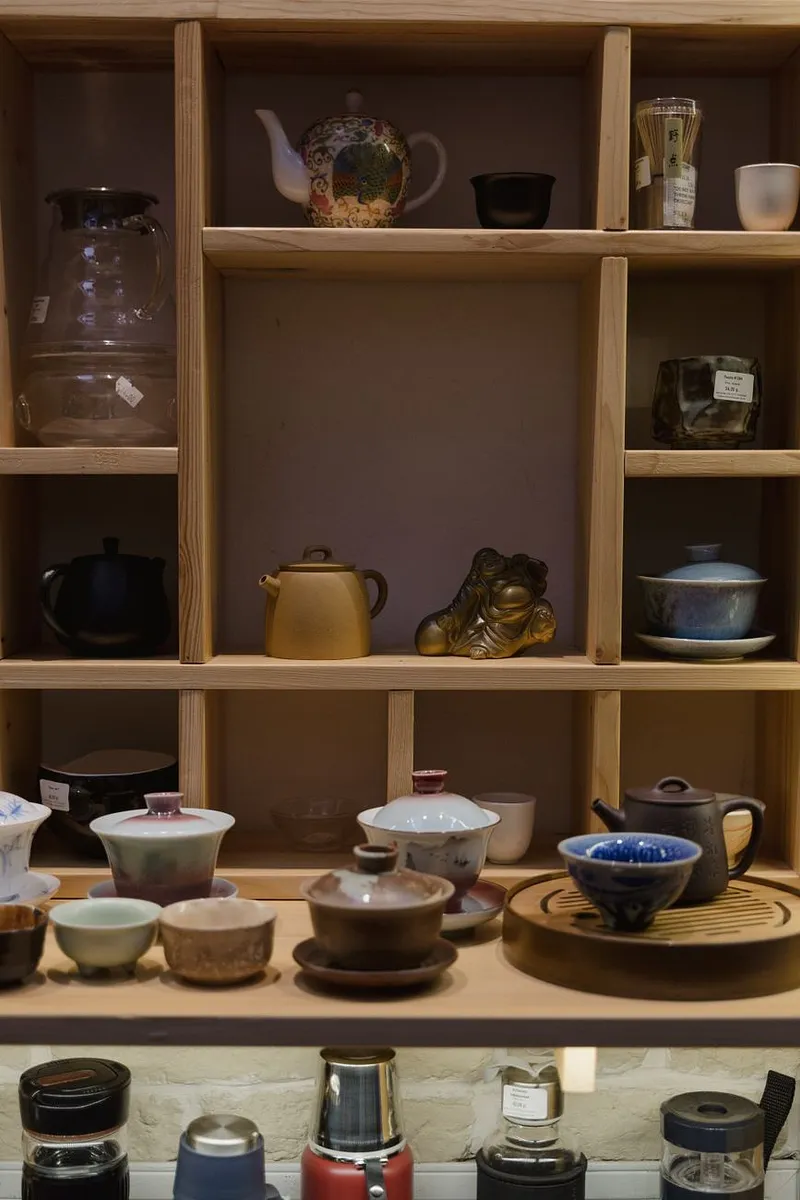
A complete tea setup costs about $60: a variable-temperature kettle, a wide basket infuser, an airtight tin or two, and whatever leaf you actually want to drink. Everything beyond that is preference rather than capability.
The useful question isn't what to buy — it's what order to buy it in, and where the spending stops improving the cup.
Buy first: the things that change every cup
- A variable-temperature kettle. The single highest-impact purchase, because temperature is the variable most likely to be wrong and the hardest to fix by feel. Green and white teas want water well below boiling; an ordinary kettle offers you exactly one option. You can work around it by letting a boiled kettle stand for a few minutes, and you will do that twice a day forever.
- A wide basket infuser. Not a ball, not a novelty. Leaves need room to unfurl and water needs to circulate through them. A cramped infuser is the most common reason good leaf produces a thin, flat cup, and the fix costs a few dollars.
- Airtight, opaque storage. Tea goes stale from air, light, heat, moisture, and odor. The bag it arrived in usually handles none of those well. A couple of small tins with tight lids protect everything else you've bought.
That's the whole list of things that reliably change what's in the cup. Total: well under a hundred dollars, most of it the kettle.
Buy second: the things that improve consistency
- A small digital scale. Turns a good cup into a repeatable one. Volume measurement is unreliable across leaf shapes — a teaspoon of rolled oolong and a teaspoon of fluffy white tea differ enormously in mass. It's why the international standard for preparing tea specifies a ratio by weight rather than by spoon.1
- A second infuser or a small teapot. Useful the first time someone else wants tea at the same time as you.
- A dedicated vessel for one tea you love. If you drink a lot of pu-erh, a small clay pot seasoned to it is a genuine pleasure. This is the point where you're buying enjoyment rather than performance, which is fine as long as you know that's what you're doing.
Where more money stops helping
Sooner than most people expect.
The leaf and the water do nearly all of the work. A $40 kettle and a $10 basket will produce tea indistinguishable from a $400 setup, because neither the kettle nor the basket is contributing flavor — they're controlling variables, and past a certain point the variables are already controlled.
What expensive teaware buys is durability, beauty, and the pleasure of using a well-made object. Those are real. They're just not the same thing as a better cup, and conflating them is how people end up with a gorgeous shelf and mediocre tea.
The reverse trade is almost always better: spend less on equipment and more on leaf. A modest setup with excellent tea beats a beautiful setup with supermarket tea every time, and it isn't close.
What you can genuinely skip
- Thermometers. The kettle has one, or you can learn the visual cues.
- Tea scoops. A teaspoon works.
- Storage caddies with windows. Light is one of the things you're protecting against.
- Starter sets that bundle teaware with tea. The leaf is usually an afterthought.
A reasonable sequence
Buy the basket and a tin this week, with one tea you're curious about. Live with that for a month — it's enough to brew well, and enough to find out whether you're the sort of person who drinks green tea daily or reaches for black every morning.
Then buy the kettle, because by then you'll know which temperatures you actually need. Then, if you're still interested, the scale.
Buying in that order means every purchase answers a question you've already run into, rather than one you might. It's also the order that lets you stop at any point without owning something you don't use.