
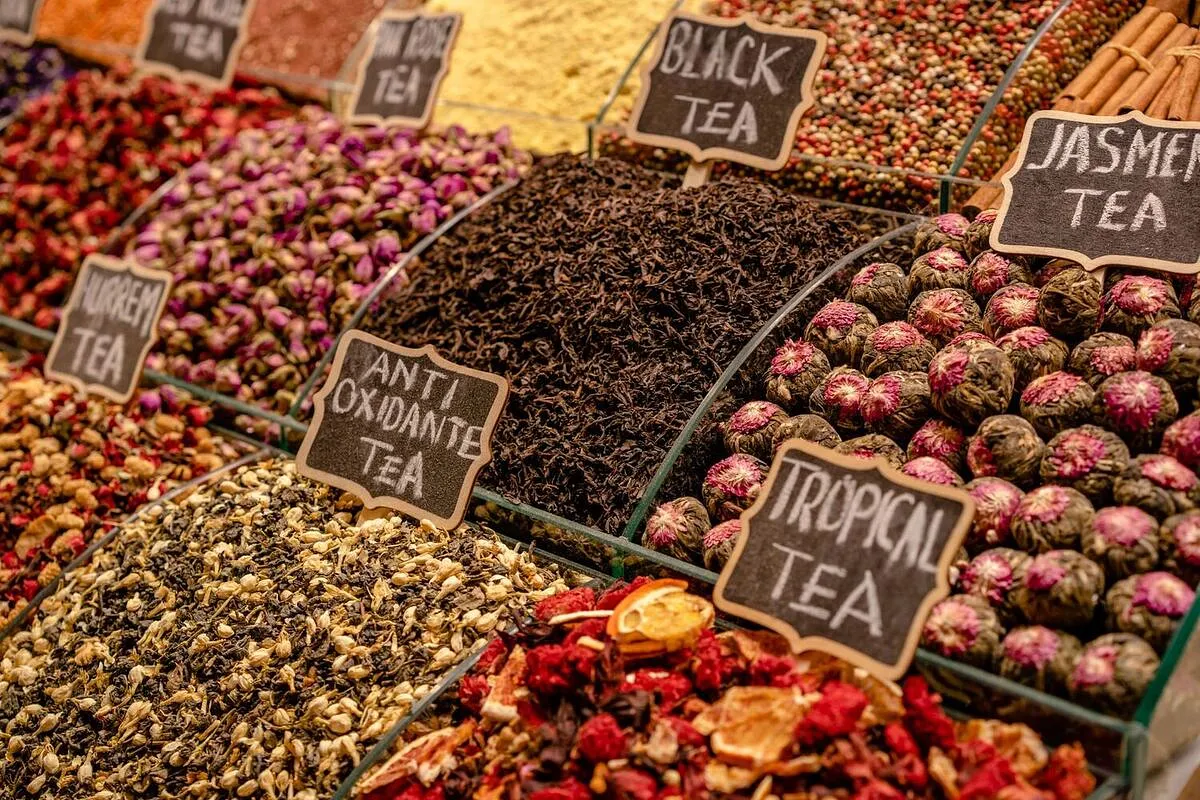
If you're building a first tea shelf, five teas will teach you more than fifty: a Chinese green, a Taiwanese oolong, an Assam or Ceylon black, a silver needle white, and a ripe pu-erh. Each one demonstrates something the others can't.
The point isn't variety for its own sake. It's that tea only makes sense comparatively — you learn what "brisk" means by drinking something that isn't.
Why these five?
All true tea comes from one plant, Camellia sinensis. What separates a green from a black is almost entirely what happens to the leaf after picking, and especially how far it's allowed to oxidize.1 These five span that range end to end, so brewing your way through them is a practical education in the single variable that matters most.
The five, and what each one teaches
- Dragonwell (Longjing), a Chinese green. Pan-fired rather than steamed, which gives it a toasted, chestnut quality instead of the marine note of Japanese greens. It teaches you water temperature, because it punishes boiling water immediately and rewards a cooler kettle with real sweetness.
- A high-mountain Taiwanese oolong. Rolled into tight pellets that open over several infusions. This one teaches re-steeping — the fourth cup is genuinely different from the first, and nothing else on the shelf makes that as obvious.
- Assam or Ceylon, a straightforward black. Full-bodied, malty, forgiving. It teaches you strength versus bitterness, because it's sturdy enough to survive experimentation and the tea most likely to be improved by milk.
- Silver Needle (Bai Hao Yin Zhen), a white tea. Just buds, withered and dried, with almost no processing in between. It teaches patience: brewed briefly it tastes like warm water, and given time it turns quietly honeyed.
- A ripe (shou) pu-erh. Fermented, dark, earthy, and the least like anything else here. It teaches you that tea has a savory register — and it's nearly impossible to ruin, which makes it a good cup for a distracted morning.
How to actually drink through them
Don't buy all five at once. Buy two, drink them for a couple of weeks, then add another.
Tasting one tea against another on the same afternoon is useful exactly once — after that, the thing that builds a palate is repetition. You want to know what your Dragonwell tastes like when you get it right, so that you notice when you get it wrong.
Brew each one at least three times before forming an opinion. First attempts are usually about the brewing, not the leaf.
What to spend
Buy small quantities of decent tea rather than large quantities of cheap tea. Twenty-five grams is plenty — enough for ten or twelve cups, which is more than enough to know whether you want more.
This matters more than it sounds. Tea doesn't spoil, but it does go stale, and a big bag of green tea you're slowly working through will taste worse every month. Small amounts, replaced often, is the right pattern for everything except pu-erh.
If you're still deciding between whole leaf and bags, the difference between loose leaf and tea bags is mostly about leaf size and room to unfurl — worth understanding before you spend.
A starting point for each
Rough numbers to begin with, adjusted to taste:
- Dragonwell (green tea timer): 175°F · 2 minutes
- Taiwanese oolong (oolong timer): 195°F · 3 minutes, then re-steep
- Assam/Ceylon (black tea timer): 205°F · 4 minutes
- Silver Needle (white tea timer): 180°F · 4–5 minutes
- Ripe pu-erh (pu-erh timer): 212°F · rinse briefly, then 3 minutes
Write down what you did. Not forever — just for the first few weeks, while the numbers are still arbitrary. The habit falls away on its own once the ratios start feeling obvious, and by then you won't need the notes.